
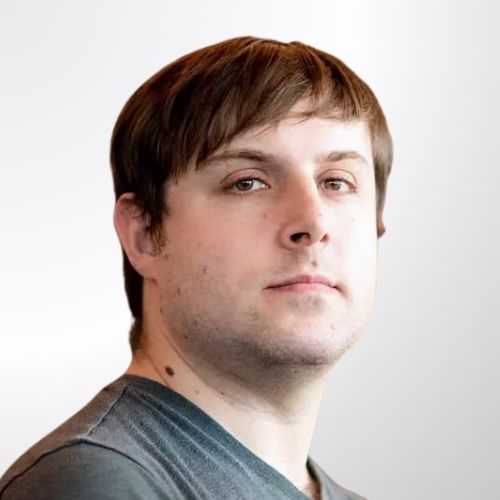
Previously, Hodak co-founded and served as President of Neuralink, the neurotechnology company established with Elon Musk in 2016. There, he helped transform BCIs from an academic pursuit into a practical engineering challenge. In particular, he led efforts to develop fully implantable neural devices capable of reading and interpreting signals from the brain.
Today, Max Hodak focuses on translating those breakthroughs into real-world medical applications. At Science Corporation, he leads the development of the PRIMA retinal implant for patients blinded by late-stage macular degeneration. Clinical trials showed major improvements in visual function, while many patients regained the ability to read. As a result, the technology received FDA Breakthrough Device designation and emerged as a major milestone in restorative neurotechnology.
Beyond retinal implants, Hodak is also advancing biohybrid neural interfaces that use living neurons instead of traditional electrodes. Unlike conventional systems, this approach seeks to create more natural and scalable connections with the brain while reducing tissue damage. At the same time, his work combines neuroscience, AI, biotechnology and advanced computing to push beyond the limits of existing BCI technology.
Earlier in his career, Hodak co-founded Transcriptic, one of the first robotic cloud laboratory platforms for the life sciences industry. But his interest in neural engineering began long before Silicon Valley. He studied biomedical engineering at Duke University Pratt School of Engineering, where he conducted brain-computer interface research in the renowned Nicolelis Lab.
Max Hodak stands among the leading voices shaping the future of neurotechnology and human-machine integration. He speaks on the convergence of AI and biology, the future of brain-computer interfaces, and the long-term potential of neural engineering. His work explores not only how technology can restore lost human function, but also how it may reshape medicine, intelligence and consciousness itself.